ÊKHÔ (2023- )
That which reproduces or recalls something, a trace, a mark.




That which reproduces or recalls something, a trace, a mark
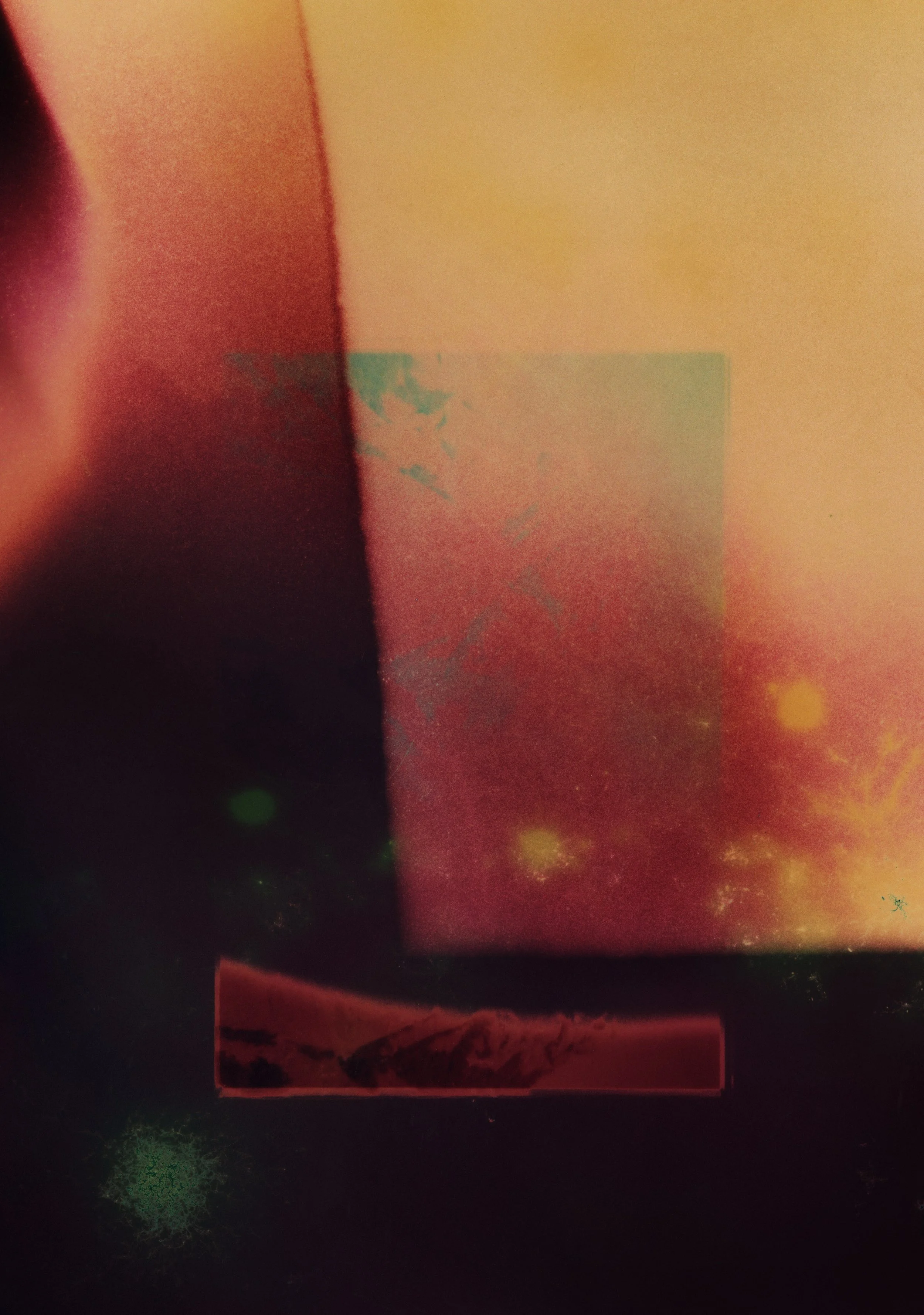
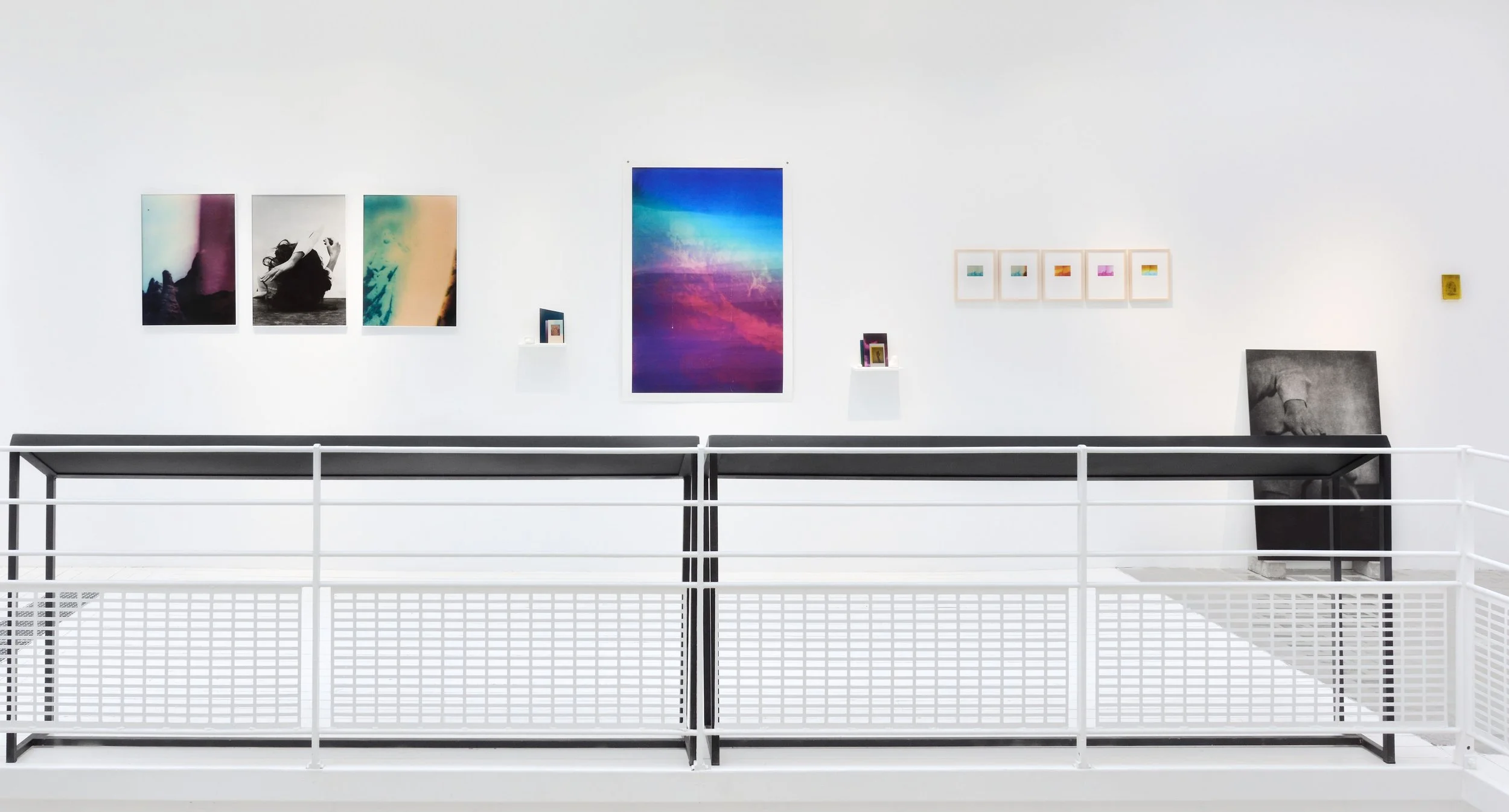
Êkhô is a series of prints, installations and objects connected to landscape. Scales of observation shift from the horizon to the microscopic, engaging a gaze that moves from distance toward matter.
The work is rooted in an attention to landscape and its transformations. Surfaces, areas of colour and details become spaces of observation, in direct relation to the places encountered.
Landscape is approached here as a sensitive experience, connected to a presence in the world and to inhabited places.
Julie Calbert develops a form of photographic cultivation, where the image is constructed through contact with matter, through manipulations in the darkroom.
The work extends through glass, sculptural forms and different printing supports, establishing a continuous relation between image, matter and space.
Colour occupies a central place. It acts within the image and alters the perception of landscape, shifting its points of reference. The images are constructed in series,
following logics close to scientific iconography, where repetition contributes to their reading.
In ancient Greek, êkhéô refers to the act of producing or returning a sound. The title also evokes the figure of Echo, associated with repetition without origin, a bodiless voice running through the series.
Julie Calbert moves through the surface, allowing a fragmented landscape to emerge, where colour imposes itself and silhouettes become points of anchorage.
FR
Ce qui reproduit ou rappelle quelque chose, une trace, une marque
Êkhô est une série de tirages, d’installations et d’objets liés au paysage. Les échelles d’observation varient de l’horizon au microscope, engageant un regard qui progresse du lointain vers la matière.
Le travail se construit à partir d’une attention au paysage et à ses transformations. Surfaces, zones de couleur et détails deviennent des espaces d’observation, dans une relation directe aux lieux traversés.
Le paysage y est abordé comme une expérience sensible, liée à une présence au monde et aux lieux habités.
Julie Calbert développe une mise en culture photographique, où l’image se construit au contact de la matière, à travers des manipulations en laboratoire.
Le travail se prolonge avec le verre, des formes sculptées et différents supports d’impression, dans une relation continue entre image, matière et espace.
La couleur occupe une place centrale. Elle agit dans l’image et modifie la perception du paysage, jusqu’à en déplacer les repères.
Les images se construisent en séries, selon des logiques proches de l’iconographie scientifique, où la répétition participe à leur lecture.
En grec ancien êkhéô signifie « rendre un son ». Le titre convoque la figure d’Écho, associée à une répétition sans origine, une voix sans corps qui traverse la série.
Julie Calbert traverse la surface et laisse apparaître un paysage fragmenté, où la couleur s’impose et où des silhouettes deviennent des points d’ancrage.
*silver gelatin prints / RA4 prints/ prints on silk / riso prints / cyanotype on glass/ceramics / stones / sculpted glass